
The detailed take
How to pick by your home's architecture
The most important question isn't which is technically best — they're all 50-year roofs. It's which one matches your house.
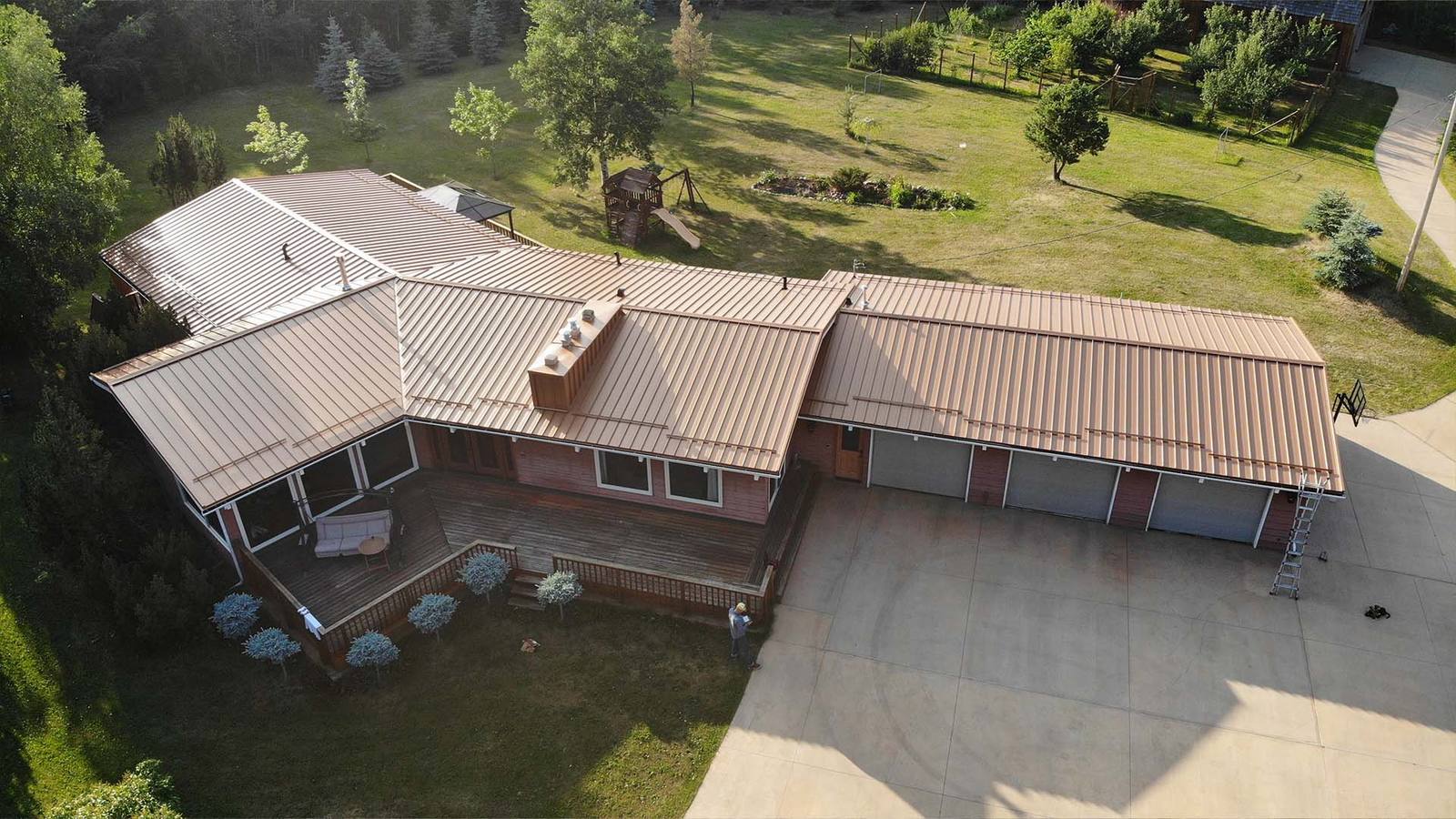
Modern, modern farmhouse, contemporary, mountain, Scandinavian, or any home recently renovated with cleaner exterior lines: standing seam in matte black or charcoal. Almost without exception.
Traditional 2-storey, craftsman bungalow, cottage-style, century home, or any property where the original character matters: metal shingles in cedar-shake or weathered slate. You preserve the character without the 15-year replacement cycle.
Heritage, Mediterranean revival, French country, Spanish colonial, or any property where the silhouette is a feature: European metal tiles in terra cotta, brown, or red. Distinctive, but in the right context.
The wrong way to pick: by budget alone. The price gap between the three is meaningful but not enormous (~30% from low to high) — the visual impact of picking the wrong profile lasts 50 years.
Where standing seam pulls ahead technically
If you're optimizing for pure performance and lifespan, standing seam wins on most dimensions. Concealed floating clips let panels expand and contract through Alberta's full temperature range without stressing the seams — a 30-foot panel run sees ~1" of movement between January and July, and the clip system absorbs it perfectly.
It also works on the widest pitch range — flat-roof at 1:12 all the way up to 18:12. Metal shingles and tiles need at least 3:12 and 4:12 pitch respectively, because they rely on water shedding rather than waterproof seams.
And it carries the widest colour selection — most premium suppliers offer 20+ PVDF colours in matte, satin, and metallic finishes vs 8–15 for shingles and tiles.
Where metal shingles make the most sense
Metal shingles are the right choice when your goal is to preserve the look of an older home while upgrading to lifetime performance. The stamped 3D profile catches light from any angle in a way that flat panels don't — which is why it reads as 'real' shake or slate even on close inspection.
Cost matters here too. Metal shingles are 25–35% cheaper than standing seam and 15–25% cheaper than European tile. On a 1,800 sq ft roof, that's a $4,000–$8,000 saving — meaningful for a homeowner whose primary goal is 'get out of asphalt' rather than 'upgrade the architecture.'
The downside: metal shingles have a subtle visual repeat pattern (typically ~24" of unique profile before it repeats). On real cedar shake or slate, every shingle is slightly different, so there's no pattern. From the curb you don't notice; from a porch 10 feet away, you sometimes do.
When European tile is worth the import cost
European-style metal tile is the niche choice — about 5–10% of our installs — but it's the right choice when the home's architecture calls for it. Mediterranean stucco-and-tile homes, French country properties, and any heritage building where clay tile would have been the original choice.
The cost premium (compared to metal shingles) reflects two things: imported European steel from named mills like Ahi (NZ), Decra (US), or established European manufacturers, and the labour-intensive interlocking tile install which takes 40–60% longer than metal shingles for the same area.
Practically speaking, metal tile is also the heaviest of the three (still 1/8th the weight of real clay tile, but heaviest in the metal family). For older homes with marginal roof framing, this matters — we sometimes upgrade rafters or add sub-framing to handle the load.